
Frozen and Burst Pipes in Baltimore Rowhouses: What to Do Now
When a pipe freezes and bursts in a Baltimore rowhouse, immediately shut off the main water valve at the basement water meter or street curb stop. Open cold faucets downstairs and hot faucets upstairs to relieve residual line pressure. Turn off electricity to flooded areas at the breaker box, puncture sagging ceiling drywall over a bucket to prevent ceiling collapse, and call for emergency extraction at (702) 478-1007.
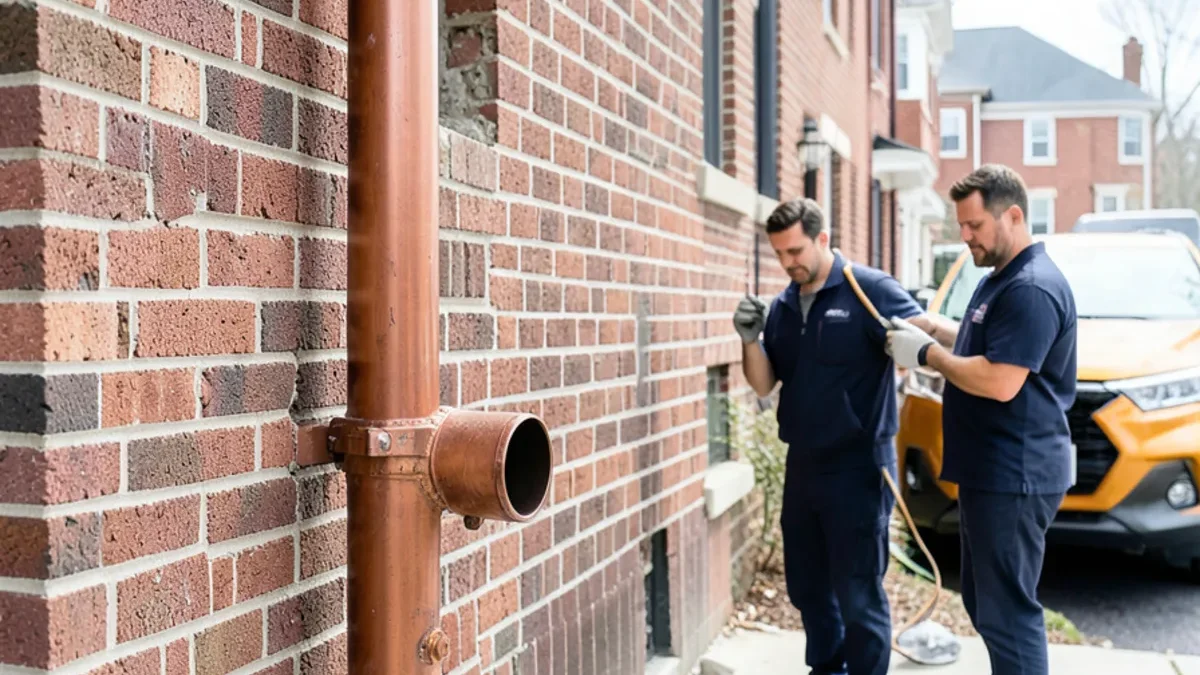
Why Baltimore Rowhouses Freeze: Uninsulated Exterior Masonry
Baltimore rowhouses feature solid brick construction that lacks modern cavity insulation. In historic neighborhoods like Canton, Federal Hill, Pigtown, and Rodgers Forge, interior plaster was often applied directly over brick masonry or shallow furring strips. Water supply pipes running to second-story bathrooms or rear additions frequently pass through cold exterior walls or unconditioned rim joist pockets. When Arctic air masses send temperatures below 20°F, continuous drafts freeze water trapped inside copper or galvanized lines.
Locating and Operating the Main Water Shutoff Valve
Stopping the flow of pressurized water is the single most critical action to limit damage. In most Baltimore rowhomes, the main water shutoff valve is located in the front of the basement where the municipal pipe enters through the front foundation wall, adjacent to the water meter. Turn a round gate valve clockwise until tight, or turn a lever handle perpendicular to the pipe. If the valve is corroded or stuck, do not force it with excessive torque; locate the exterior curb stop on the sidewalk or contact your local water authority immediately.
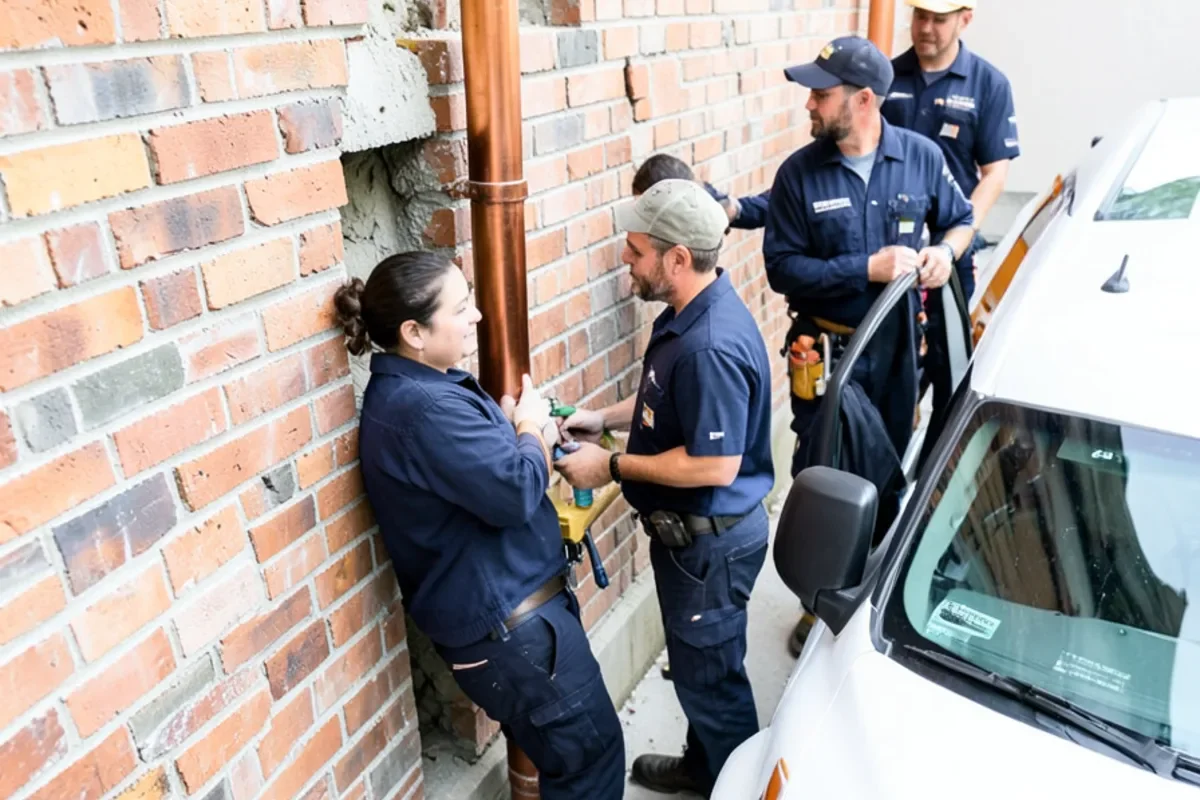
Safe Thawing Procedures (Never Use Open Torches)
If a pipe is frozen but has not yet burst (no water flowing from faucets), careful thawing can prevent pipe rupture. Open faucet valves to allow expanding water and steam to escape. Use a handheld hair dryer, warm towels, or an electric space heater placed at a safe distance to warm the cold pipe gradually, starting from the faucet end toward the frozen blockage. Never use open flame blowtorches, propane heaters, or charcoal inside a rowhouse; open torches are a leading cause of catastrophic residential structure fires.
Relieving Hydraulic Pressure from Bubbling Ceilings
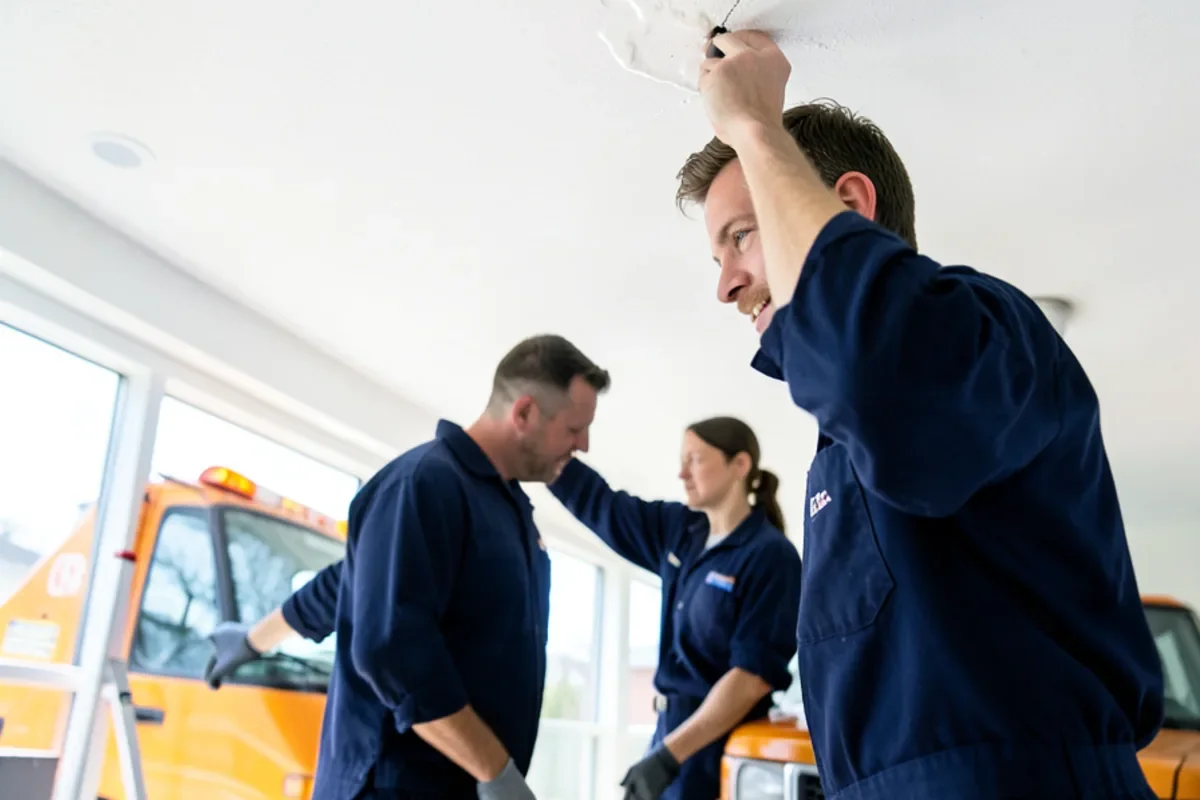
When an upper-floor pipe bursts, water drains downward through floorboards, pooling on top of painted ceiling drywall or plaster. As water accumulates, the ceiling sags under heavy hydraulic weight, creating large water blisters. Place a large trash can or bucket directly underneath the lowest point of the blister, and carefully puncture the center of the bubble with a screwdriver or utility knife. Draining the trapped water in a controlled stream relieves weight and prevents the entire ceiling sheet from collapsing under pressure.

Cavity Moisture Inspection and Structural Drying
Water from a burst pipe travels through hidden floor joist bays and wall cavities, often penetrating adjoining rowhouse party walls. Surface drying with household fans leaves moisture trapped behind plaster and beneath subfloors, causing wood rot and mold. Responding restoration contractors use infrared thermal cameras to map hidden moisture paths without cutting walls unnecessarily, deploying specialized wall-cavity drying injectors and commercial LGR dehumidifiers to dry framing within 3 to 4 days.
Post-Freeze Pipe Repair, MHIC Permitting, and Plumbing Code Compliance
While emergency water extraction and structural drying are time-critical mitigation tasks that begin immediately without permitting delays, physical plumbing repairs and subsequent structural rebuilding in Maryland are strictly regulated. Under Maryland Business Occupations and Professions Article (Title 12), repairing or replacing pressurized water supply pipes requires a licensed Maryland Master Plumber operating under an approved plumbing permit from the Baltimore City Department of Housing and Community Development (DHCD) or Baltimore County Department of Permits, Approvals and Inspections (PAI). Furthermore, any subsequent structural rebuilding—such as hanging new drywall, framing new partition walls, or replacing damaged subflooring—must be performed by a contractor holding an active Maryland Home Improvement Commission (MHIC) license. Always verify that your restoration contractor maintains proper trade licenses before authorizing permanent reconstruction.
Baltimore Rowhouse Winter Freeze Prevention Checklist
- Keep home thermostats set to at least 55°F at all times, even during winter vacation periods
- Open vanity and kitchen sink cabinet doors on sub-freezing nights to let heated room air reach perimeter pipes
- Allow a pencil-thin trickle of cold water to run continuously from the highest fixture during single-digit nights
- Disconnect, drain, and store all exterior garden hoses from outdoor sillcocks before the first November freeze
- Seal air gaps around foundation penetrations, dryer vents, and basement windows using expanding foam insulation
Because rowhouses share continuous floor joists seated into common brick party walls, a burst pipe on the second floor of one home frequently drains along joist pockets directly into the neighbor's ceiling. When reporting a burst pipe in a rowhome, alert your adjoining neighbors immediately so they can check their shared walls with a moisture meter.
Our guides and technical overviews cite official state licensing boards, regional public works departments, environmental agencies, and industry standards:
Frequently Asked Questions: Frozen and Burst Pipes in Baltimore Rowhouses: What to Do Now
Specific answers and technical considerations drawn from this guide.
Yes. Burst pipes are typically covered as a sudden and accidental water discharge under standard Maryland homeowners insurance policies, provided the property was adequately heated. Insurance covers water extraction, structural drying, and rebuilding, minus your policy deductible.
Questions About an Active Leak or Basement Flood?
Speak with our Baltimore emergency dispatch team. Call (702) 478-1007 to connect with an independent local pro.